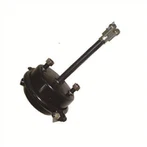
The advantage of the air suspension is to reduce the impact of liquid flow on the tank body during bumps, protect the safety of freight, reduce tire wear, and reduce fuel consumption. Domestic air suspension has accumulated a wealth of practical experience. With the development of technology, air suspension has become an indispensable standard for high-end heavy trucks and special vehicles. Today I will talk about the structure and advantages of air suspension:
The structure of the air suspension:
Structurally speaking, air suspension is generally composed of air springs, shock absorbers, guide structures, air supply units, height control valves, etc. The most common type of air suspension on trucks is air suspension, which is similar to ordinary spring suspensions. It is different. The height of the vehicle can be adjusted through the inflating and deflating of the airbag by using the compressibility and expandability of the gas.
Advantages of air suspension:
Small turbulence: The adjustment of the air spring can ensure a constant height of the car box, and can reduce the liquid sloshing caused by the turbulence, reduce the impact on the tank, protect the safety of freight, and increase the service life of the tanker.
High economy: The use of air suspension can effectively reduce tire wear and fuel consumption. According to statistics, under the same road conditions and load conditions, fuel consumption per 100 kilometers has been reduced by more than 1.2 liters.
Enhance the protection of tires and other accessories: the air suspension system can more effectively absorb the vibration caused by the uneven road surface, reduce the distortion and impact of the vehicle during driving, and thus have a better effect on axle parts, tires, frame, box, etc. The protective effect.
Safety: Air suspension transportation is more stable. When running, the center of gravity of the vehicle is almost unchanged. The axial and radial stability is good, and the driving is safer and more reliable. The squat braking system is adopted to effectively avoid the forward tilting impact of the vehicle during emergency braking.