Latest Products


Contact Us
- East Zheng Gaicun Road, Liangshan Sub-District Office, Liangshan County, Jining City, Shandong Province
- dayouren666@gmail.com
- +86-537-7339799

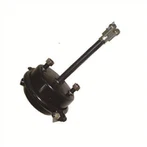
Air Brake Chamber
The function of the air brake chamber is to convert the pressure of the compressed air into the mechanical force that makes the brake camshaft rotate to realize the braking action. The air brake chamber is a clamp clamp diaphragm type. The front and rear brake chambers are different in size, but their structure is basically the same.
Description
Liangshan Dayou Machinery Manufacturing Co., Ltd. is one of the major domestic enterprises specializing in the production of trailers and semi-trailer accessories. It is located in the world-famous Shuibo Liangshan, which is the production base of trailers (special vehicles) in China-Beijing-Kowloon Railway. The 220 National Road runs through the entire territory. The traffic is developed and the transportation is convenient.
Why Choose Us
Advanced Equipment
Our company is a professional enterprise integrating R&D, design, manufacturing and sales based on industry advantages. It has advanced production equipment and processing technology, and strong mechanical processing capabilities.
Professional Team
The company adheres to the concept of "efficiency is life, quality is fundamental", and various businesses have shown a trend of prosperity, and the development has become more mature and stable. On the basis of consolidating the domestic market, many products have successfully entered the international market, and have successfully entered the international market.
Rich Experience
Many well-known companies have established good diversification, grade and branding, strictly control quality, strive to improve the technical content of products, consolidate the advantages and market leadership that have been obtained, and continuously improve the core competitiveness of the company to promote the sustainability of the company Sexual development and market competitiveness.
24H Online Service
If you have difficulties when using the product, we will respond to your needs as soon as possible and give you the greatest support.

The kingpin of a semi-trailer is a metal standard component used in a semi-trailer to connect the tractor and the trailer.
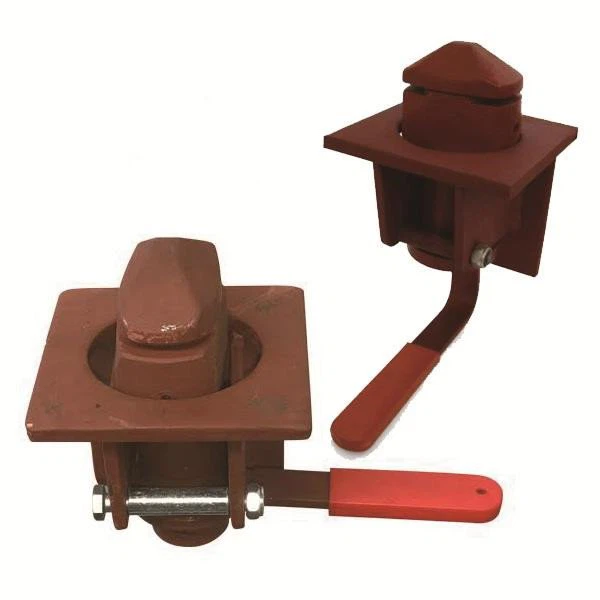
Twist Lock Container For Trailers
The semi-trailer turn lock is a turning lock on the four corners of the container spreader, which connects the spreader and the container.

Trailer Adjustable Landing Gear
The semi-trailer lifting leg is located at the front end of the semi-trailer frame for use after the semi-trailer is separated from the tractor.

The air reservoir is a gas storage device in the automobile braking system, used to store the gas compressed by the air compressor (air pump), and used for automobile braking, whistle and other systems.

The automobile traction seat is a kind of traction part used for pulling the semi-trailer of the cargo traction vehicle. It is mainly composed of a seat cover, a saddle base and a locking mechanism.

The air brake chamber is also called the brake cylinder, and its function is to convert the pressure of the compressed air into the mechanical force that makes the brake camshaft rotate to realize the braking action.
What is Air Brake Chamber?
The function of the air brake chamber is to convert the pressure of the compressed air into the mechanical force that makes the brake camshaft rotate to realize the braking action. The air brake chamber is a clamp clamp diaphragm type. The front and rear brake chambers are different in size, but their structure is basically the same.
When the car is braking, air enters the brake chamber from the air inlet, deforms the diaphragm under the action of air pressure, pushes the push rod, and drives the brake adjustment arm, rotates the brake cam, and removes the brake shoe friction plate. Press against the brake drum to brake.
The braking strength is related to the spring preload. When the air pressure in the pressure chamber is lower than 0.65MPa, the braking force generated by the sub-chamber is inversely proportional to the air pressure value. , So you can implement emergency braking.
Benefits of Air Brake Tanks
Capacity
The size of the tank is determined by the vehicle's air consumption needs, which depends on factors like vehicle weight, number of axles, and expected operating conditions.
Pressure Relief Valve
To prevent overpressure, air brake tanks are equipped with pressure relief valves that release excess air if the pressure exceeds a certain threshold.
Drainage
Tanks have drain ports to allow the removal of water and other contaminants that can accumulate inside the tank due to condensation.
Heat Dissipation
Proper heat dissipation is important to maintain air temperature within safe limits. Tanks may have fins or other features to enhance heat dissipation.
Maintenance Access
Easy access to the tank for inspections and maintenance is important to ensure the system remains functional.
Type of Air Brake Tanks
Air Brakes in Cars
Air brake systems, while commonly associated with larger commercial vehicles like trucks and buses, are not typically found in standard passenger cars. Instead, passenger cars predominantly utilize hydraulic brake systems. These systems operate using brake fluid to transfer force from the brake pedal to the brake pads or shoes, creating friction to slow or stop the vehicle.
Air Brakes in Buses
When it comes to the safety and functionality of buses, especially those of substantial size and weight, air brakes are extremely important. Buses, similar to heavy trucks, commonly utilize air brake systems due to their efficiency in managing the significant braking demands posed by these vehicles.
Air Brakes in Trucks
Integral to the safe operation of trucks, air brakes play a crucial role in managing the substantial weight and stopping power required for these heavy vehicles. Trucks commonly employ air brake systems due to their ability to handle the demanding braking needs imposed by their size and load capacities.
Air Brakes in Semitrucks
Air brake systems serve as the backbone of safety and control in semitrucks, providing the necessary braking force to manage their immense size and weight. Semitrucks extensively rely on air brake systems, which are vital for ensuring the safety of operations, particularly when navigating highways while hauling heavy loads.
What Is The Function Of The Air Brake Chamber
The air brake chamber is an essential component of a pneumatic braking system in commercial vehicles such as trucks, buses, and trailers. Its primary function is to convert the compressed air into mechanical force that activates the brake shoes or pads on the wheels.
When the driver applies the brakes, air pressure from the brake pedal is directed to the air brake chamber, which contracts and expands to create a pushing or pulling force on the slack adjuster. This force then moves the brake shoes or pads against the brake drum or rotor, creating friction that slows down or stops the vehicle.
The air brake chamber also plays a critical role in releasing the brakes. When the pressure in the system is released, the air brake chamber expands, which causes the brakes to release. This rapid conversion from compressed air to mechanical force and back to its original state is what makes the air brake chamber an essential safety feature in commercial vehicles.
How does Air Disc Brake Work?
Air disc brakes, also known as pneumatic disc brakes, are a type of braking system commonly used in heavy-duty vehicles such as trucks, buses, and commercial vehicles. They function similarly to traditional hydraulic disc brakes but use compressed air instead of hydraulic fluid to transmit force and apply the brakes.
Brake Application: When the driver presses the brake pedal, a signal is sent to the air brake system, activating the air compressor. The compressor builds up compressed air, which is stored in an air reservoir or tank.
Brake Chamber: Compressed air flows from the air reservoir into the brake chamber. The brake chamber consists of a diaphragm and a pushrod assembly. The air pressure pushes against the diaphragm, causing the pushrod to extend.
Caliper and Brake Pads: The extended pushrod transmits the force to the caliper, which houses the brake pads. The caliper is mounted on the axle, and the brake pads are positioned on both sides of a rotating disc or rotor.
Brake Pad Contact: As the pushrod extends, the brake pads are squeezed against the rotating disc. This creates friction between the pads and the disc, generating the braking force.
Braking Force: The friction between the brake pads and the disc causes the rotational energy of the disc to convert into heat energy, effectively slowing down or stopping the vehicle.
Release of Brakes: When the driver releases the brake pedal, the air pressure in the brake chamber is released. This allows the brake pads to move away from the disc, discontinuing the braking action.
Air disc brakes offer several advantages over traditional hydraulic disc brakes, including improved heat dissipation, reduced fade, enhanced braking performance, and simplified maintenance. Their design allows for easier inspection, pad replacement, and better cooling, making them suitable for heavy-duty applications where reliable and efficient braking is crucial.
Components of Air Brake Tanks
Compressor: Driven by the engine, the compressor can compress air to about 100-120 liters per minute. This provides enough pressure that can be stored for delivery to the brake chambers when the brake pedal is depressed.
Air Storage Tanks: Air storage tanks are used to store compressed air. These tanks are usually made of aluminum or steel and can hold pressures up to about 100 bar.
Brake Valves: Brake pedal valves direct compressed air to the brake chambers or parking brake system when the brake pedal is depressed by the driver. These valves usually operate electromechanically or hydraulically.
Brake Chambers: Brake chambers use compressed air to push brake pads or discs against the wheels. These chambers are usually made of steel or aluminum and can hold up to about 100 bar of pressure.
Brake Pads or Discs: Brake pads or discs provide slowing or stopping by rubbing against the wheel. Brake pads usually contain friction materials fixed to a metal base. Brake discs are usually made of steel and are located inside or outside the wheel.
How to Maintain Air Brake Tanks
Regular Inspection: Conduct regular inspections of the air brake system, including the air compressor, valves, lines, and chambers, to identify any signs of wear, leaks, or damage.
Check for Air Leaks: Air leaks are a common problem in air brake systems. Listen for any audible hissing sounds and inspect for air bubbles or oil leaks at connections, valves, and fittings.
Adjust Brake Shoes: Over time, brake shoes can become worn and lose their effectiveness. Regularly check and adjust the brake shoes to maintain the proper clearance and avoid excessive brake lining wear.
Clean and Lubricate: Clean and lubricate the moving parts of the air brake system, such as slack adjusters and camshafts, to prevent rust and ensure smooth operation.
Drain Air Tanks: Moisture can collect in the air tanks, leading to corrosion and reduced brake performance. Regularly drain the air tanks to remove any accumulated water and contaminants.
Monitor Air Pressure: Keep an eye on the air pressure gauge and ensure it reaches the required pressure levels. Low air pressure can indicate a problem with the air compressor or a leak in the system.
The more weight a vehicle has, the more probable it can deploy air brake tanks. Small automobile brake lines need hydraulic fluid to be supplied and maintained manually, while air is readily available and ready to be utilized in any truck braking system. But that's just one of the reasons they're so popular in the business.
A compressor fills storage tanks to a predetermined pressure, which a governor controls. A valve ensures that air only flows in one direction via the pipe, ensuring that the air tanks do not leak even if the compressor does. The air is then sent into the brake lines, where pressure variations (due to the brake pedal being pressed) are utilized to move a sequence of rods, cams, and brake components as required while driving.
Hydraulic brake systems are used as the main braking system on almost all passenger vehicles and light trucks. Hydraulic brakes use brake fluid to transmit force when the brakes are applied. Since brake fluid cannot be compressed, force is transmitted immediately and directly at each wheel when you press the brake pedal.
Air brake systems are used on large commercial vehicles because they can develop and transmit high mechanical forces over great distances using simple components and connections. Air brake systems use compressed air, which is stored in tanks, to produce the force that applies the brakes at each wheel.
FAQ
Hot Tags: air brake chamber, China, suppliers, manufacturers, factory, wholesale, price, for sale, Trailer Adjustable Landing Gear, Heavy Suspension System, Semi Trailer King Pin, U Bolt, Light Tiye Suspension for Semi Trailer, American Type Rear Hanger
You Might Also Like